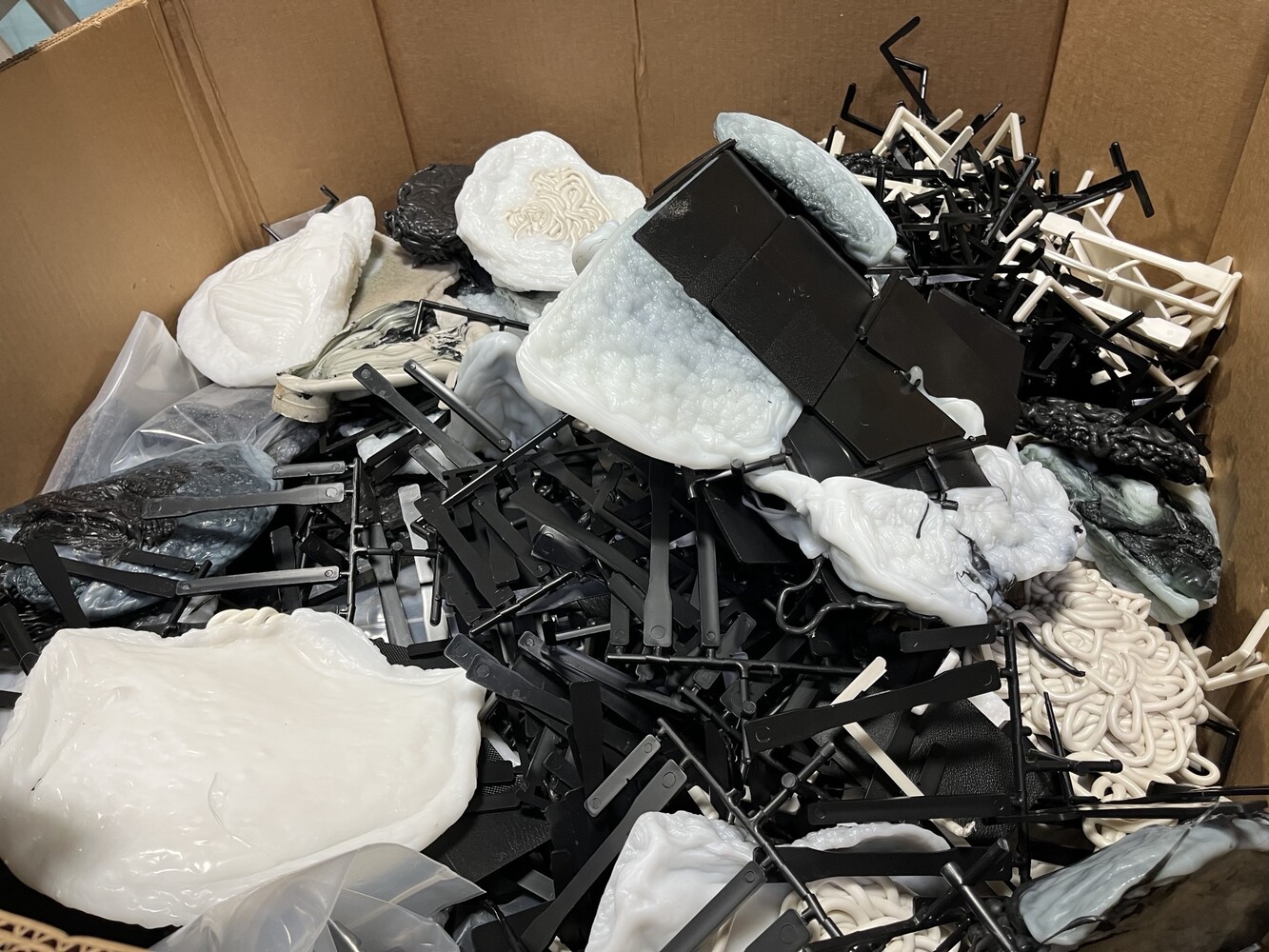
Every injection molder and extruder knows the scene. A color change. A material transition. A startup or shutdown. And there it is—a heavy, warm, awkwardly shaped purge pulled from the press, destined for a gaylord.
For many plants, that purge represents waste. A disposal cost. A headache.
But for those who understand the value of post-industrial recycling, that purge is an opportunity. With the right handling, sorting, cutting, and grinding process, it becomes a consistent, high-quality regrind ready to feed back into production—or to become a valuable feedstock for other manufacturers.
Let me walk you through how it happens.
The Starting Point: Sorting and Segregation
The journey to quality regrind begins before the purge ever leaves your plant floor. Proper sorting and segregation are non-negotiable.
When a PP purge comes off the press, it should be identified, labeled, and placed into a dedicated container for polypropylene scrap. Clean, consistent sorting prevents cross-contamination from other resins like ABS, polycarbonate, or nylon, which melt at different temperatures and would ruin the integrity of the final regrind. The Association of Plastic Recyclers emphasizes that material purity is the foundation of recyclability.
At this stage, clear bin labeling, employee training, and disciplined sorting practices protect the value of the material. One misplaced purge can contaminate an entire gaylord and turn a valuable feedstock into worthless waste.
Cutting: Breaking Down the Bulk
The next challenge is size reduction. Purges are notoriously difficult to handle. They are bulky, irregularly shaped, and often too large to feed directly into a standard granulator. Research has documented that purge waste cannot be reintegrated into the recycling chain using traditional mills due to significant variations in size and shape.
This is where the cutting step becomes essential. Purges must first be reduced into manageable pieces—typically by using specialized equipment like a shredder or a guillotine-style cutter. Some processes even involve softening the purge at controlled temperatures (around 250–280°C) to make cutting easier without degrading the polymer. The goal is to produce consistent chunks that can be fed into the granulator efficiently and safely.
Grinding: Creating Uniform Regrind
Once the purge is cut into manageable pieces, it moves to the granulator. This is where the real transformation happens.
The granulator uses high-speed rotating knives to cut the material against fixed stator blades. The screen size determines the final particle size of the regrind. For injection molding applications, regrind typically needs to match the pellet size and flow characteristics of the virgin resin it will replace. Maintaining consistent particle size is critical. Variation leads to inconsistent melt flow, erratic feed, and ultimately, quality defects in the molded part.
Quality granulators are designed to minimize heat buildup and reduce the production of "fines"—the dusty particles that can cause problems in downstream processing. A well-controlled grinding step produces clean, uniform flake ready for reuse.
Quality Assurance: The Final Check
The final step in the process is quality control. Before the regrind is packaged and shipped, it must be verified for:
- Purity: No cross-contamination from other resin types.
- Particle size: Consistent with customer specifications.
- Bulk density: Stable and predictable for feeding extruders.
- Moisture content: Controlled to prevent defects in the final part.
At C‑Square Polymer, we apply rigorous quality controls across material handling, separation, and processing to ensure minimal cross-contamination, consistent pellet sizing, and stable material properties across batches. We understand that manufacturers need to confidently integrate recycled content into production without sacrificing operational stability or finished product performance.
The Result: A Valuable Feedstock
When these steps are executed correctly, the finished regrind is indistinguishable from virgin resin in performance. It can be blended at high percentages—some applications run up to 100% regrind—reducing reliance on virgin resin, lowering material costs, and meeting sustainability targets.
Turning Your Purges into Profit
If you are generating polypropylene purges and wondering how to turn them into a revenue stream, you do not have to invest in your own size reduction equipment.
C‑Square Polymer specializes in toll processing—we do the sorting, cutting, grinding, and quality assurance for you. We handle the entire process, from pickup to delivery of clean, consistent regrind that is ready for your production line or your customers' needs.
Our expertise in handling complex post-industrial materials means you get the benefits of recycling without the capital expense or operational distraction. With over 3,500 tons of plastic waste processed annually, we have the experience and infrastructure to deliver quality you can trust.
Let's talk about your purge. Reach out to C‑Square Polymer for a free consultation on how we can turn your polypropylene scrap into high-value feedstock. We are based in the Dallas–Fort Worth area and serve manufacturers nationwide.
What is the biggest challenge you face with purge recycling in your plant? I would love to hear about your experiences in the comments.